
ŌCHT outreach supports digi coaching interns
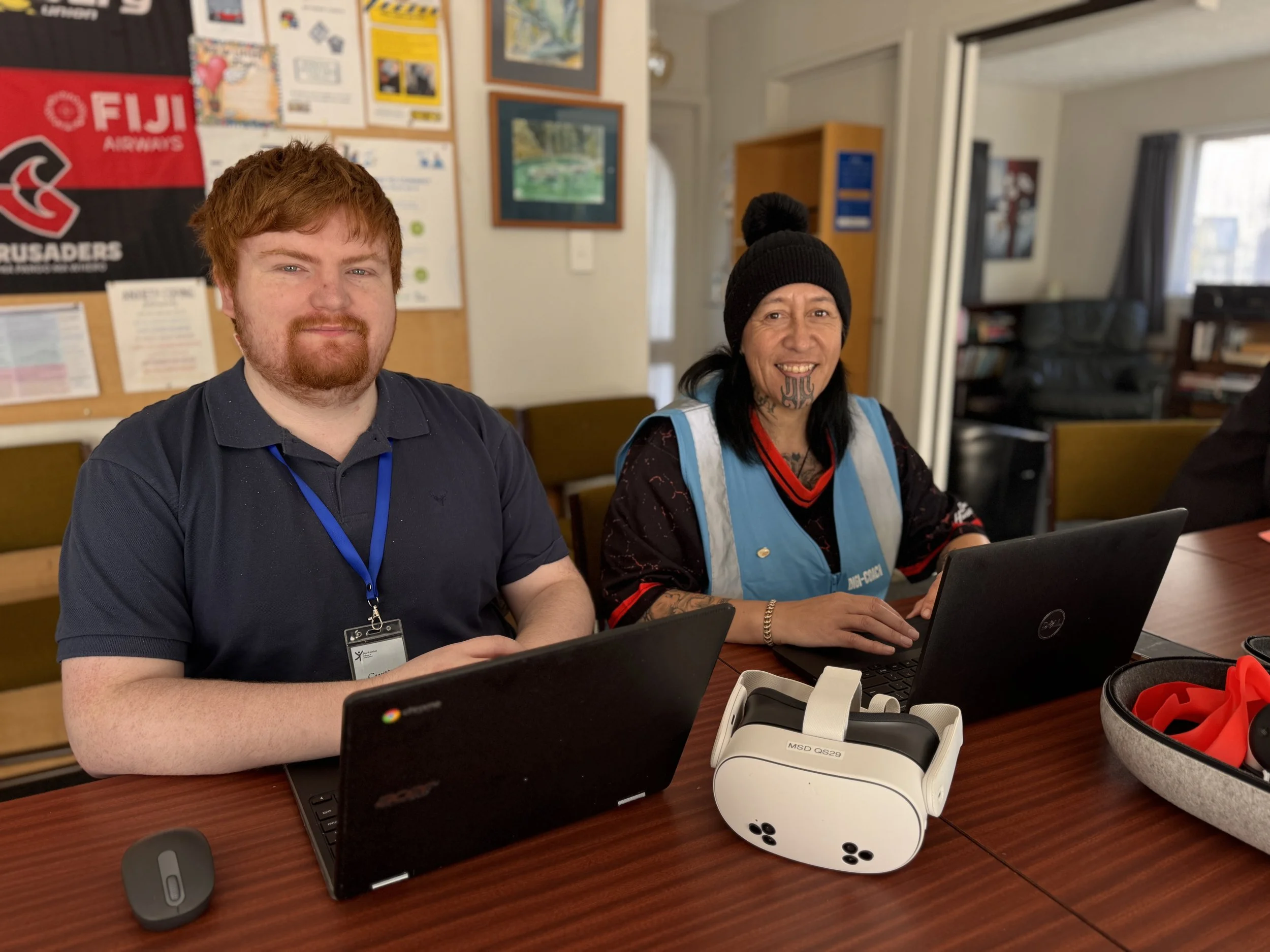
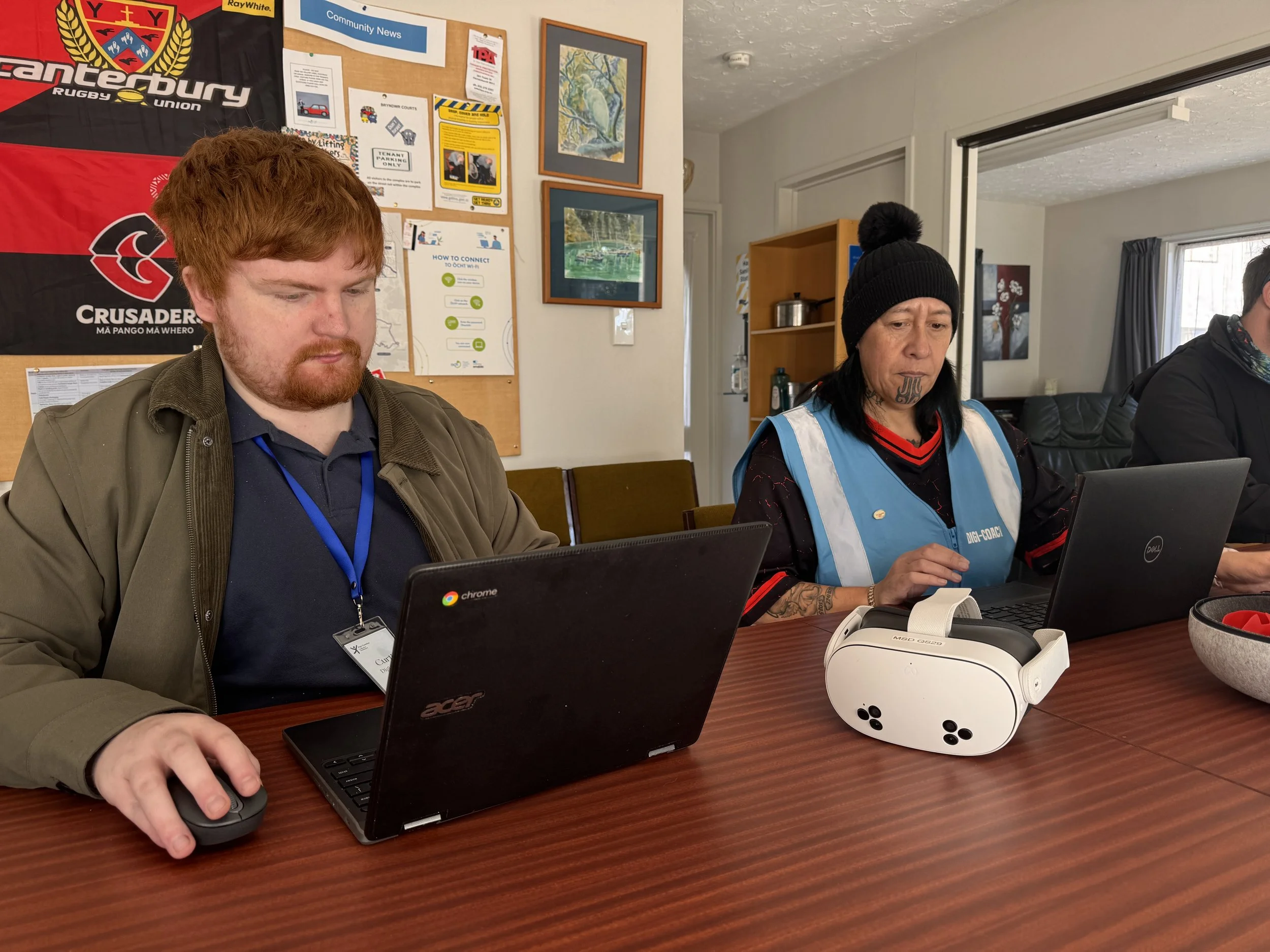
Intern Digi-Coaches Curtis and Trae hard at work in an ŌCHT community lounge. The pair are working with ŌCHT digital coach Cam for 13 weeks as part of Digital Inclusion Alliance Aotearoa’s (DIAA) Digi-Coaches Pathway to Employment programme.
ŌCHT is helping grow digital confidence in our communities while helping train the next generation of community digital coaches.
Curtis and Trae joined ŌCHT in late April as intern Digi-Coaches through the Digital Inclusion Alliance Aotearoa’s (DIAA) Digi-Coaches Pathway to Employment programme.
Working with ŌCHT digital coach Cam, they’re supporting tenants in drop-in digital support sessions across ŌCHT communities while developing their own workplace, communication and education skills.
The pair also support weekly Friday lunchtime drop-in sessions at Delta Community Support Trust, where digital help is provided alongside wider community and wellbeing support.
ŌCHT tenants can also attend these sessions.
ŌCHT strategic housing manager Amelia says the programme builds on years of work for ŌCHT helping tenants bridge the digital divide.
ŌCHT established its digital coaching service as research found tenants were among the least digitally connected groups in Christchurch.
“Digital confidence is increasingly important in everyday life, whether that’s accessing housing and health services, applying for jobs, staying connected with whānau, or simply being able to use a device confidently,” Amelia says.
“We recognised several years ago that many of our tenants faced real barriers around digital access and confidence, which is why ŌCHT established its digital coaching service in 2021.
“Hosting Curtis and Trae allows us to expand that support for tenants while also helping people develop valuable work skills and experience in a real community setting.”
The DIAA programme was developed to strengthen digital support capacity in local communities while also creating employment pathways for people who may face barriers entering the workforce.
It provides paid 13-week placements in libraries and community organisations, helping participants build digital, customer service and workplace skills while supporting people with everyday digital needs.
Trae brings a broad background in community-focused work to the role. Alongside a Diploma in Information Technology, she has previously worked in rest homes, payroll, cleaning and as a pedal-powered postie.
“A lot of the jobs I’ve done have involved helping people in some way,” Trae says.
“I’ve really enjoyed being able to sit down with people, work through problems together and help them feel more confident using their devices.”
Curtis studied as a veterinary nurse and has previously worked in petrol stations, and in landscaping and plastering. He says he’s always been comfortable with technology and enjoys working with people.
“I’ve enjoyed being able to help people with everyday things that can become really frustrating if you don’t know where to start,” Curtis says.
“Sometimes it’s passwords, phones, laptops or TVs. Sometimes it’s helping people use online tools or reconnect with family through apps and messaging.
“It’s been good learning how to explain things clearly and help people feel comfortable asking questions. I’d definitely be interested in continuing in something like this in future.”
Cam says the work often centres on practical everyday issues many people take for granted.
“A lot of what we help with is everyday stuff such as setting up phones, remembering passwords, accessing emails, filling in online forms, using apps, or helping someone feel less intimidated by technology,” Cam says.
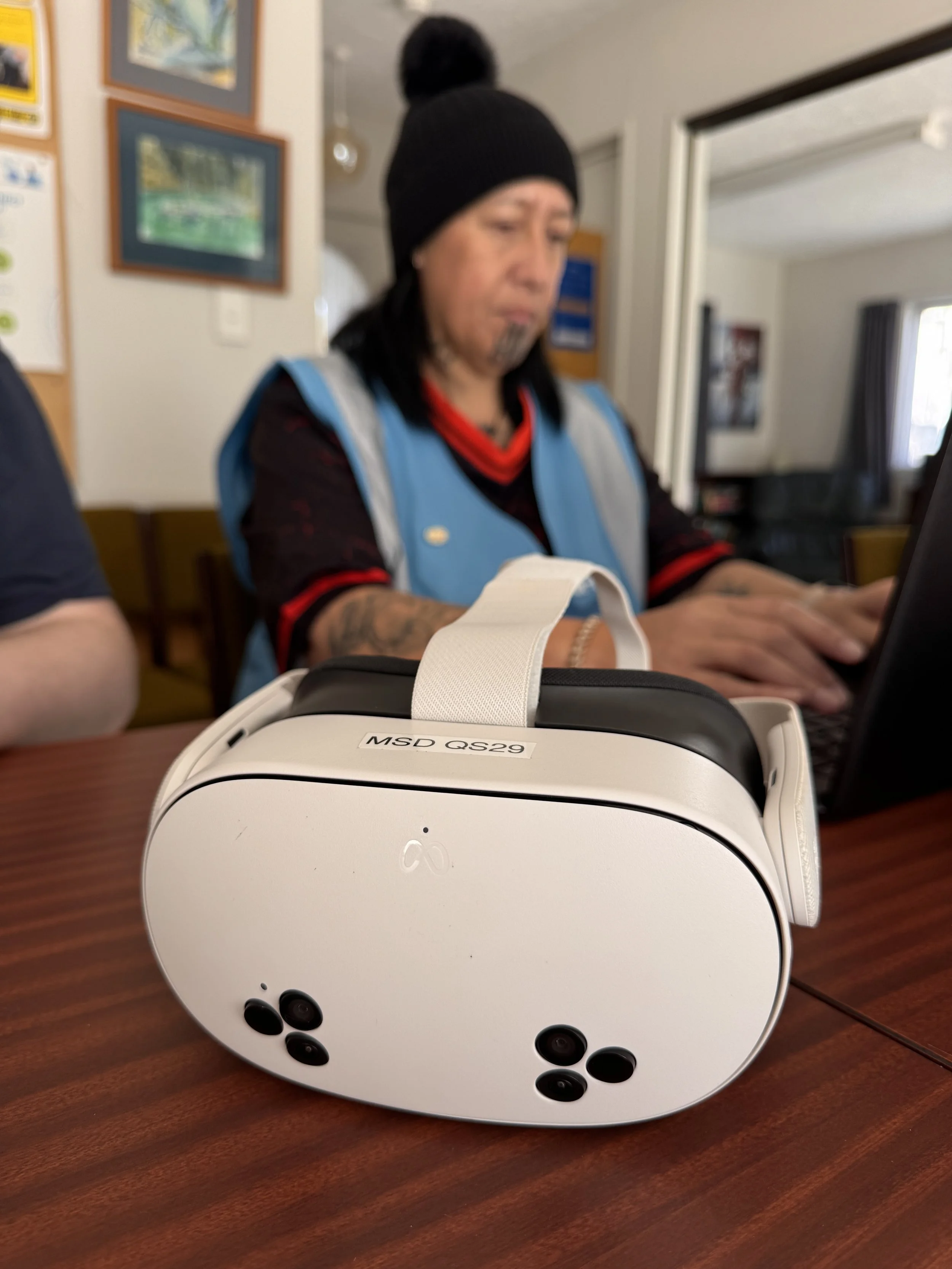
Trae and Curtis help job seeking tenants to experience different work environments using a VR headset.
“Many people are using technology to stay connected with family and friends, so sometimes helping someone navigate WhatsApp, Facebook Marketplace or video calling can make a real difference socially as well.
“When people build confidence digitally, it can open doors socially too. They become more connected, more confident, and more able to access services and opportunities independently.
“Curtis and Tracey have brought great energy and patience into the role, and tenants have responded really positively to having approachable people they can simply sit down and talk things through with.”
The team also has access to an MSD virtual reality headset, allowing tenants and community members to experience different work environments and industries through immersive simulations.
The VR experiences include industries such as forestry, heavy machinery operation and kiwifruit picking — opportunities many people would otherwise never experience without visiting a worksite.
At Delta’s Friday community café, the trainees support a broader wrap-around community environment focused on reducing isolation and strengthening community connection.
DIAA’s Digi-Coach programme has already supported thousands of learners nationally through digital drop-in sessions and community-based support.
DIAA says more than 12,000 learners received digital support through the programme during 2025, with 25 Digi-Coaches moving into employment during or soon after their placements.